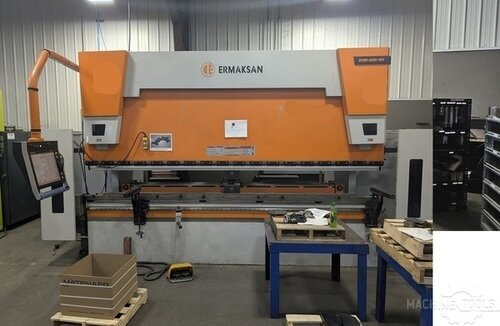
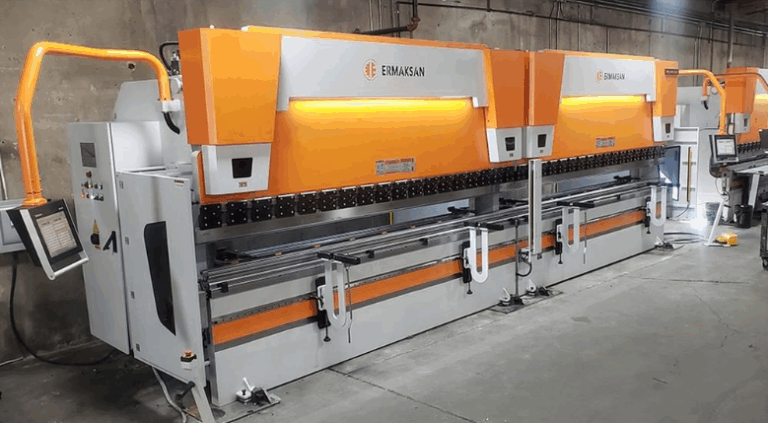
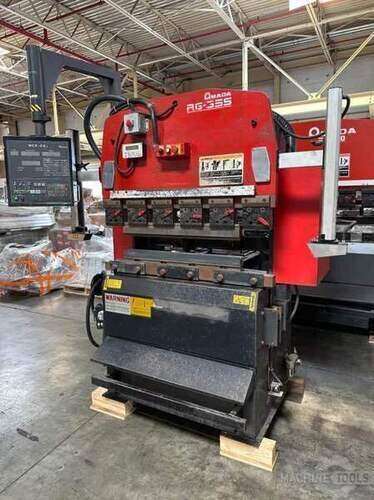
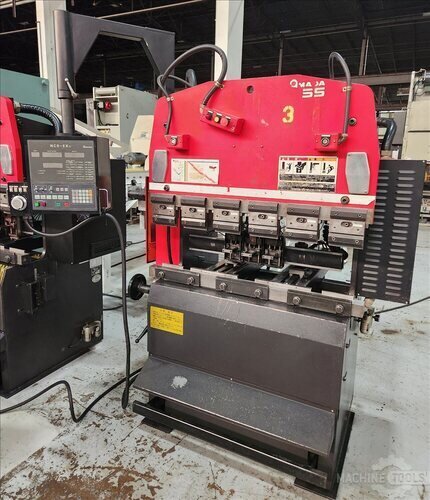
In today’s fabrication market, the shops that consistently win profitable work are the ones that control their full workflow from plate and sheet to finished part. As President of Mac-Tech, I spend much of my time helping owners, CFOs, and operations leaders turn capital equipment decisions into predictable margins and scalable growth. Pairing HSG flatbed lasers with high-tonnage press brakes is one of the clearest pathways I see to transforming cutting and forming from a bottleneck into a strategic advantage.
Turning Flatbed Laser and High-Tonnage Brake Integration into a Competitive Advantage
When cutting and forming are disconnected, work-in-process piles up and lead times stretch, especially on heavy plate and large structural components. An integrated cut-and-bend cell centered on HSG flatbed lasers and a high-tonnage press brake closes that gap, allowing you to move directly from nested programs to bent parts with fewer touches and less waiting.
Why HSG flatbed lasers for plate and sheet
- Fiber laser technology with high cutting speeds on mild steel, stainless, and aluminum plate.
- Stable cutting performance on thicker materials and larger formats that are common in heavy fabrication.
- High-accuracy cutting that improves bend consistency and reduces rework at the press brake.
High-tonnage brakes as the forming backbone
- Sufficient tonnage to form thick plate, structural components, and long parts without overloading the machine.
- Advanced crowning and backgauge systems that match the precision of laser-cut blanks.
- Capability to consolidate multiple manual forming operations into one controlled, repeatable process.
Integrated workflow benefits
- Cut parts go directly to the brake with standardized tooling and documented bend sequences.
- Common offline programming tools can manage both cutting nests and bend programs in one environment.
- Operators spend more time producing and less time searching, staging, and re-measuring parts.
From my vantage point, the competitive advantage shows up clearly in quoting. Shops that can reliably promise shorter lead times and higher accuracy on heavy plate win better jobs and build a reputation for handling complex work that others turn away.
From Capital Expense to Strategic Asset: Calculating ROI on Cut-and-Bend Cells
A high-powered HSG flatbed laser paired with a high-tonnage press brake is a major investment, but when the cell is planned correctly it behaves like a strategic asset rather than a sunk cost. The ROI is not only in cutting speed or bending tonnage, it is in how the combined system changes your mix of work and your cost structure.
Investment Timing Considerations:
- When to buy versus lease heavy equipment
- Aligning machinery purchases with fiscal year-end cycles
- Leveraging Section 179 and bonus depreciation to reduce after-tax equipment cost
- Staging investments across years laser first, brake second or vice versa to balance cash flow
Key ROI Drivers in Cut-and-Bend Cells:
- Higher throughput per shift on thick plate and structural parts versus legacy plasma or older CO₂ lasers.
- Increased first-pass yield and reduced rework due to consistent cut quality and controlled bending processes.
- Lower per-part labor cost because operators handle material fewer times and run more automated cycles.
- Ability to capture higher-margin work that demands precision, reliability, and fast turnaround.
Financial Metrics to Track:
- Cost per part that fully loads labor, consumables, and overhead against your new cell.
- Utilization rate of laser and brake separately and together to identify bottlenecks.
- Incremental revenue from work you could not quote or win before upgrading.
- Payback period based on real job data, not brochure estimates.
At Mac-Tech, I urge clients to build a realistic pro forma around their cut-and-bend cell using their actual job histories. When we plug HSG and high-tonnage brake performance into those numbers, it often shows a faster payback and higher IRR than incremental upgrades spread across older equipment.
Capacity, Throughput, and Labor: Redesigning the Fab Floor for Higher-Margin Work
Adding a flatbed laser and high-tonnage press brake is not just a machine purchase, it is a chance to rethink how material enters, flows, and leaves your facility. Many shops underestimate how much layout and process design affect realized ROI.
Operational Impact:
- Faster turnaround on large-scale structural projects
- Better workforce allocation and cost predictability
- Reduced forklift traffic between cutting, staging, and forming areas
- Clear visibility into queues so planners can prioritize high-value jobs
Designing the Cut-and-Bend Cell Layout:
- Place the HSG flatbed laser and high-tonnage brake to minimize lift distance and part travel.
- Establish standardized staging zones for raw material, WIP, and finished parts with clear labeling.
- Ensure adequate space and tooling organization around the brake, so setup does not become your new bottleneck.
- Integrate part flow with downstream welding, machining, or coating to avoid creating new constraints.
Labor Strategy and Skills Mix:
- Cross-train operators to run both the HSG laser and the press brake to cover absences and prevent idle time.
- Use automation on repetitive or heavy parts to reduce ergonomic risk and improve operator retention.
- Shift skilled people away from manual handling and toward programming, quality, and continuous improvement.
- Track productivity per operator, not just per machine, to understand real labor efficiencies.
In practice, the strongest financial results come from shops that treat this integration as a plant redesign opportunity. They free up square footage, reorganize staffing, and reposition themselves to take on more demanding, higher-margin fabrication work.
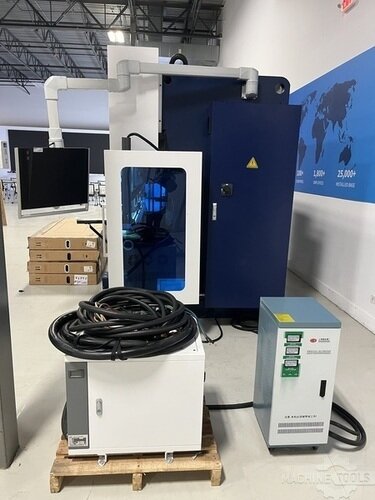
HSG HC1703
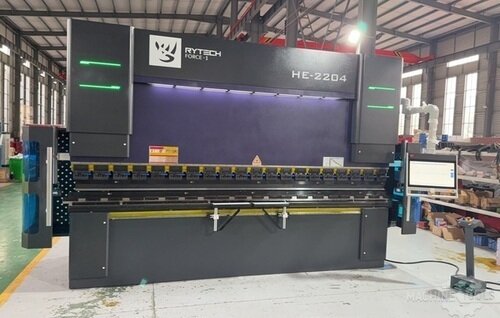
RYTECH FORCE-1 HE 2204
Reducing Risk in High-Tonnage Decisions: Specification, Tooling, and Automation Choices
High-tonnage press brakes and large-format lasers require careful specification. Overbuying can lock up capital unnecessarily, while under-specifying tonnage, open height, or bed length can limit the work you can take on during the life of the machine.
Specification Framework:
- Match tonnage and bed length to current and targeted future plate thickness and part lengths.
- Evaluate open height and stroke for box forming and multi-stage tooling setups.
- Confirm that the HSG laser bed size and brake bed length support your longest parts and nesting strategies.
- Plan for integration with offline programming and shop management systems from day one.
Tooling Strategy and Standardization:
- Standardize on a core set of tooling profiles that cover 80 percent of your jobs.
- Use precision-ground tooling to take full advantage of the accuracy from the HSG flatbed laser.
- Invest in fast-clamp or hydraulic clamping systems that shorten changeovers on high-mix work.
- Maintain a documented library of bend setups to reduce operator-dependent variation.
Automation and Material Handling Choices:
- Consider sheet loaders and unloaders for the HSG laser when volume and thickness justify them.
- Use front supports, sheet followers, or robotic assistance on the high-tonnage brake for very heavy parts.
- Evaluate simple automation options first, such as conveyors or trolleys, that provide big gains without high complexity.
- Build in modularity so you can add more automation later as volumes grow.
I view risk reduction as a process of aligning your equipment with your business model and growth plans. At Mac-Tech, we spend significant time on up-front discovery so that an HSG laser and high-tonnage brake purchase is not a gamble but a managed, data-backed decision.
Partnering with Mac-Tech: Lifecycle Support, Data-Driven Upgrades, and Scalable Growth
A cut-and-bend cell is not a one-time transaction. To keep it producing at its financial potential, you need a partner who understands not just machines but the business metrics behind them. That is the role my team and I at Mac-Tech aim to fill.
Lifecycle Support Approach:
- Installation and start-up assistance tailored to your floor layout and existing processes.
- Operator and programmer training focused on both performance and safety.
- Preventive maintenance programs to keep the HSG laser and high-tonnage brake at peak uptime.
- Rapid-response service to minimize unplanned downtime and protect delivery commitments.
Data-Driven Optimization and Upgrades:
- Regular reviews of cut times, bend times, and utilization to pinpoint process improvements.
- Guidance on software updates, nesting strategies, and bend sequence optimization.
- Recommendations for incremental investments such as automation, tooling, or additional shifts when justified by data.
- Benchmarking your performance against what we see across similar shops and industries.
Planning for Scalable Growth:
- Roadmaps that anticipate when you will need an additional laser, brake, or robotic cell.
- Support for expanding into new sectors such as structural steel, heavy equipment, or energy.
- Alignment of new equipment with your financing strategy, tax planning, and long-term asset portfolio.
- Coordination between Mac-Tech solutions and other technologies in your plant so everything works as one system.
My goal is to ensure every HSG flatbed laser and high-tonnage press brake we place becomes a platform for strategic growth. When the technology, floor design, and financial planning work together, clients see their cut-and-bend operation evolve from a cost center into a true competitive engine.
FAQ
What financing options are available for large fabrication systems?
Mac-Tech assists clients in structuring capital or lease agreements that balance cash flow and tax benefits.
How can automation improve ROI in 12–24 months?
By reducing manual handling, rework, and setup time, which are key drivers of hidden cost savings.
How do I know if a high-tonnage press brake is the right size for my work?
We review your current and targeted part mix, plate thicknesses, and lengths to specify tonnage, bed length, and open height that support growth without overspending.
Can I phase in an HSG laser and press brake instead of buying both at once?
Yes, many clients start with the laser or the brake, then add the complementary machine when volume and cash flow justify a full cut-and-bend cell.
What are current trends in heavy fabrication demand?
Public infrastructure projects and energy sectors continue to drive structural steel and plate-processing growth.
How does integrating cutting and bending impact labor planning?
Integration tends to reduce handling labor and allows you to reassign skilled people to higher-value tasks like programming and quality.
What role does preventive maintenance play in ROI?
Consistent maintenance protects uptime, extends equipment life, and prevents costly disruptions that erode margins.
I am always available to discuss how an HSG flatbed laser paired with a high-tonnage press brake can fit into your specific business strategy. Reach out to me directly at joe@mac-tech.com or 414-477-8772, and we can map a path from equipment investment to sustained profitability and growth.
Get Weekly Mac-Tech News & Updates

Similar Posts
Strategic Customization of Ermaksan Press Brake Systems for Large Fabricators: Business Value and ROI Insights
Discover how tailored Ermaksan press brake solutions drive ROI and optimize operations for large fabricators through strategic equipment planning. Joe Ryan President, Mac-Tech joe@mac-tech.com | 414-477-8772 | 888-MAC-9555
Ermaksan Press Brakes Give Shipyards Precise Control on Large Hull Plate
See how advanced forming technology boosts hull quality, cuts rework, and de-risks capital planning for modern shipyards. Joe Ryan President, Mac-Tech joe@mac-tech.com | 414-477-8772 | 888-MAC-9555
Ermaksan High-Tonnage Press Brakes: Strategic Advantage for Wind Tower Fabricators
Discover how high-tonnage press brakes sharpen competitiveness, cut bottlenecks, and de-risk big-capacity investments for wind tower shops. Joe Ryan President, Mac-Tech joe@mac-tech.com | 414-477-8772 | 888-MAC-9555
Ermaksan High-Tonnage Press Brakes Cut Bridge Rework and Delay Costs
High-tonnage press brakes reduce rework, delays, and lifecycle risk, turning bridge fabrication into a more predictable, high-ROI capital investment. Joe Ryan President, Mac-Tech joe@mac-tech.com | 414-477-8772 | 888-MAC-9555
Prodevco Beam Lines Consolidate Steel Processing, Freeing Floor Space
Consolidate steel processing, reclaim floor space, and maximize ROI with smarter beam line investments and planning. Joe Ryan President, Mac-Tech joe@mac-tech.com | 414-477-8772 | 888-MAC-9555
Prodevco Robotic Beam Coping: Lower Rework Costs for Bridge & High-Rise
Boost margins and bid confidence with robotic beam coping that cuts rework, stabilizes schedules, and strengthens long-term fab capacity planning. Joe Ryan President, Mac-Tech joe@mac-tech.com | 414-477-8772 | 888-MAC-9555