On coil-fed folding, slitting, shearing, and roll forming lines, I keep seeing the same issue show up in different ways: the upper beam setup is treated like a minor adjustment when it is actually the gatekeeper for accuracy, flow, and safety. When the beam is slow to dial in or inconsistent across the width, shops end up chasing bends, fighting camber, slowing down feeds, and burning time on test pieces that should have been sellable parts. The real-world bottleneck is not just the clamp itself, it is the uncertainty that forces operators to creep, recheck, and over-handle material to stay out of trouble.
Throughput and Changeover Bottlenecks in Coil-Fed Folding, Slitting, Shearing, and Rolling Lines
In a typical coil systems environment, throughput gets capped when the line has to stop for upper beam adjustments that are touchy, slow, or dependent on a single experienced operator. You see it on folders feeding long panels, on slitters where the downstream tension is inconsistent, and on shearing and rolling lines where the hold-down needs to match the material and width every time. The result is frequent micro-stoppages, extra leader and trailer scrap, and changeovers that expand from minutes into half-hours.
What makes it worse is high-mix production where the next job changes gauge, width, coating, or stiffness, so the upper beam has to be reconfigured repeatedly. If the setup cannot hold repeatably, the first article becomes a process of trial and error, and that uncertainty ripples into scheduling and labor allocation. I have watched good lines with capable equipment like Stefa folders or Mac Shear solutions get dragged down by setup friction that should be mechanical and predictable, not tribal knowledge.
How Sectional Express Clamps Upper Beam Improves Clamping Accuracy, Repeatability, and Material Flow
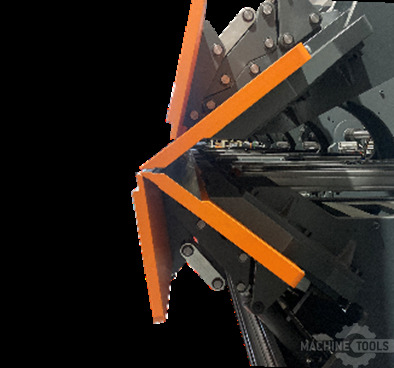
The practical advantage of a Sectional Express Clamps upper beam is that it lets you build a solid upper beam across the working width or intentionally create a gapped setup where needed, without sacrificing stability. A solid upper beam configuration helps when you need uniform pressure distribution for consistent bends and clean material control, especially on wide panels or long parts. A gapped setup gives controlled relief for profiles, hems, returns, or jobs where selective clamping prevents marking and improves flow.
Configuration outcomes to target:
- Solid upper beam for uniform hold-down and repeatable bends across width
- Gapped setup for profile clearance and reduced marking on sensitive surfaces
- Faster reconfiguration between widths without re-squaring the entire beam
- More stable material feed into folding, roll forming, and downstream handling
On coil-fed folders and panel production, improved clamping repeatability means fewer angle corrections and less reliance on slowing the feed to keep parts straight. On slitting and shearing applications, more consistent hold-down reduces flutter and wandering that can show up as edge quality issues or downstream tracking problems. In practice, this is how you stabilize material flow so your Rytech handling, roll former entry, or panel bender staging stays predictable instead of reactive.
For teams comparing manual versus automated setups, the tradeoff is usually capital versus consistency. A staged approach often makes sense: start by removing the biggest variability in the upper beam clamping method, then add sensors or control integration later as the line’s mix and volume justify it. When you want to explore the configuration options and hardware path, I point people to https://shop.mac-tech.com/ as a starting place for parts and upgrade conversations.
Safety and Ergonomics Gains from Faster, More Controlled Upper Beam Setup and Access
Every time an operator has to reach into a pinch zone to tweak a clamp, re-check alignment, or muscle a heavy component into position, the line is collecting risk. Upper beam work happens at awkward heights and angles, and it is often done under time pressure because everyone is waiting on the setup. Faster, more controlled setup reduces the number of times hands and bodies are near hazard points, and it shortens the exposure time for the tasks that cannot be eliminated.
In addition, a repeatable upper beam setup reduces the temptation to run test strips in a way that puts operators too close to moving material. When the clamping method is predictable, operators can verify with fewer iterations and keep their attention on safe material handling and clear communication. That matters even more on wider coil-fed work, where long panels amplify the consequences of a small setup error.
Safety wins I look for in the field:
- Less manual reaching into clamp zones during changeover
- Fewer trial pieces and fewer unplanned stops to troubleshoot drift
- Reduced handling of long panels that want to twist or spring
- More consistent procedures that are easier to train and audit
Evaluation Criteria and Integration Checklist for Automation, Sensors, and Line Controls
Shops usually ask me whether they should go all-in on automation or start with a mechanical upgrade and integrate later. My answer depends on mix, tolerance needs, and how disciplined the plant is about data and standard work. A Sectional Express Clamps upper beam pairs well with staged integration, especially on lines that already have capable controls but lack consistent clamping behavior.
Integration checklist:
- Confirm material range: gauge, yield behavior, coating sensitivity, and width changes
- Define repeatability targets: bend angle tolerance, edge quality, and acceptable marking
- Identify control touchpoints: recipe management, setup verification, and lockout states
- Plan sensor strategy: position confirmation and fault-proofing for clamp state
- Validate downstream compatibility: roll former entry guides, coil handling, and panel staging
On a Stefa folder or a coil-fed folding cell feeding a panel bender, the goal is a setup that can be tied to job recipes and verified without guesswork. On a shearing or slitting line, the goal is stable material control that does not require constant operator correction. When you are considering broader line integration, Vayjo can be relevant for workflow, quoting, and production visibility that supports high-mix planning, and that is where a focused look at https://vayjo.com/ can help connect the equipment side to scheduling and profitability.
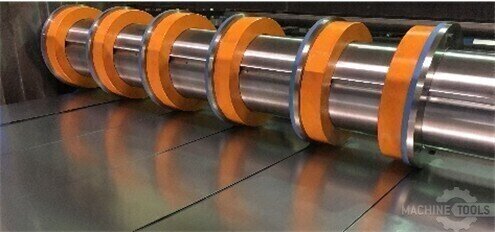
STEFA LCS3
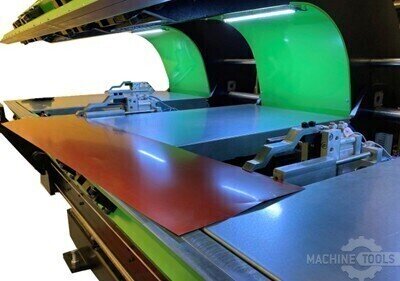
STEFA VHX 6 DOUBLE FOLDER
ROI Modeling for Setup Reduction, Scrap Minimization, and OEE Improvement
I model ROI around what the line is truly losing today: time, scrap, and confidence in repeatability. Setup reduction is the most visible lever, but the quieter payoff is fewer bad first parts and fewer downstream disruptions that come from inconsistent clamping. When your upper beam setup is reliable, you shorten changeovers, reduce trial cycles, and free skilled labor from babysitting the machine.
ROI drivers to quantify:
- Setup minutes saved per changeover multiplied by changeovers per week
- First-article scrap reduction and fewer test strips per job
- Reduced downtime from troubleshooting tracking, marking, or inconsistent bends
- Increased OEE from fewer micro-stops and more stable run speeds
- Labor reallocation from setup support to value-add tasks
For example, even a conservative reduction of 10 to 20 minutes per changeover adds up quickly in a high-mix coil-fed environment. Add in scrap avoidance on coated material, and the payback tightens further because you are saving both material cost and capacity. The best ROI stories I see are the ones where scheduling becomes more predictable because the process no longer depends on one person who knows the quirks of the old setup.
Next Steps for Specifying and Implementing a Sectional Express Clamps Upper Beam Upgrade
The first step is defining whether you need a solid upper beam, a gapped setup capability, or a mix depending on part families. From there, I want to understand the line type and where the upper beam sits in the process, whether it is feeding a roll former, supporting a folding station, or acting as the hold-down before shearing or slitting. The upgrade should be sized to your actual material range and production reality, not the best-case job you run twice a year.
Implementation is usually clean when we plan around your changeover routine, access constraints, and training needs. I prefer to start with a controlled trial plan that includes baseline setup time, baseline scrap, and a definition of done for repeatability, so the team can see the improvement in the first week. To start narrowing options and hardware, use https://shop.mac-tech.com/ and then we can align the configuration to your specific machine and throughput targets.
FAQ
When should I upgrade a roll former, folder, shear, or coil line instead of patching the current setup?
When setup time, scrap, or safety exposure is persistent and operator-dependent, a clamping and upper beam upgrade is often the fastest path before a full line replacement.
Servo vs hydraulic: which is better for coil-fed forming and folding?
Servo typically wins on repeatability and recipe-driven changeovers, while hydraulic can be robust for heavy work; the right answer depends on mix, tolerance needs, and duty cycle.
What is the best strategy to reduce setup time without disrupting production?
Start with the highest-variance setup step like upper beam clamping, standardize it, then add staged automation or sensors once the mechanical process is stable.
How do coil handling improvements reduce labor and improve safety?
Better coil systems reduce manual intervention, stabilize feed and tension, and cut the amount of time operators spend near moving material and pinch points.
Are panel benders a good fit for high-mix production?
Yes, especially when paired with predictable upstream clamping and material flow, because the repeatability supports fast job-to-job transitions.
What maintenance points matter most on coil-fed lines related to clamping and hold-down?
Wear points include clamp interfaces, alignment surfaces, and any components that get adjusted frequently; reducing adjustment frequency typically reduces wear and variability.
What information do you need from me to size a Sectional Express Clamps upper beam solution?
Profiles, gauges, coil width range, target throughput, material type and coating, and your current changeover sequence are the essentials.
Contact me for a walkthrough, demo, or upgrade consultation at pat@mac-tech.com or 414-232-7929, and you can also start exploring options at https://shop.mac-tech.com/.
Get Weekly Mac-Tech News & Updates

Similar Posts
Seamless Automation: Panel Benders in Coil-to-Part Lines
In the article Seamless Automation: Panel Benders in Coil-to-Part Lines, Pat O’Neill, a National Product Manager and Regional Sales Executive at Mac-Tech, discusses how manufacturers can enhance production efficiency, forming accuracy, and line reliability. Pat emphasizes the importance of selecting the right machines and integrating automation into manufacturing processes. He advocates for real-world planning to ensure seamless operations and optimal performance. By focusing on these strategies, Pat assists manufacturers in achieving more productive and reliable production lines. Pat O’Neill National Product Manager / Regional Sales Executive, Mac-Tech pat@mac-tech.com | 414-232-7929
Unlock Precision and Speed with CNC Folder Upgrade
Pat O’Neill, a National Product Manager and Regional Sales Executive at Mac-Tech, discusses enhancing production efficiency through CNC folder upgrades. He emphasizes the importance of precision and speed in manufacturing and explains how advanced roll forming, folding, and coil-fed fabrication systems can significantly improve these aspects. Pat assists customers in optimizing their production processes by implementing these technologies, leading to increased output and reduced costs. For further inquiries or assistance, Pat can be contacted at pat@mac-tech.com or 414-232-7929.
Stefa Gutter Roll Forming Cuts Scrap, Improves Throughput
The article explains how Stefa gutter roll forming boosts productivity by making smarter roll-forming and coil-fed system choices. By optimizing forming stations, tooling, and material handling, the line maintains tighter profiles and more consistent cut lengths, reducing rework and scrap. Integrated coil feeding, controls, and cutoff coordination improve speed without sacrificing accuracy, while better guidance, tensioning, and changeover practices increase uptime. The result is higher throughput, improved forming reliability, and steadier output quality. Pat O’Neill National Product Manager / Regional Sales Executive, Mac-Tech pat@mac-tech.com | 414-232-7929
Choosing Hybrid Over Electric Drives in Rytech Systems: Cost and Precision Benefits
The article by Patrick O’Neill discusses the advantages of choosing hybrid drives over electric ones for Rytech Systems, focusing on cost-effectiveness and precision. Pat emphasizes how manufacturers can enhance production efficiency, forming accuracy, and line reliability by selecting the right machinery, incorporating automation, and engaging in practical planning. He provides insights on optimizing manufacturing processes to achieve better outcomes. Pat O’Neill National Product Manager / Regional Sales Executive, Mac-Tech pat@mac-tech.com | 414-232-7929
CNC Panel Benders: Cut Setup Time with Software Presets
In the article, CNC Panel Benders: Cut Setup Time with Software Presets, Patrick (Pat) O’Neill discusses strategies to enhance manufacturing efficiency, accuracy, and reliability. He emphasizes the importance of selecting the right machines, implementing automation, and engaging in practical planning. By using software presets, manufacturers can significantly reduce setup times, leading to improved production processes. Pat offers insights into optimizing operations through advanced technology and thoughtful decision-making. Pat O’Neill National Product Manager / Regional Sales Executive, Mac-Tech pat@mac-tech.com | 414-232-7929
Tool-Free Clamp Plate Removal Cuts Press Brake Downtime
Pat O’Neill explains how tool-free clamp plate removal and smarter press brake setup choices reduce downtime and stabilize production. By speeding changeovers and improving access for maintenance, shops increase throughput while keeping bends consistent. Combined with informed forming decisions and coil-fed system selection, the approach boosts forming accuracy, lowers scrap from misalignment and handling, and improves overall line reliability by minimizing interruptions and variation. Pat O’Neill National Product Manager / Regional Sales Executive, Mac-Tech pat@mac-tech.com | 414-232-7929