
I’m Kyle Bialozynski, a Sales Executive at Mac-Tech, and I’ve spent a lot of time in Midwest fab shops where the goal is simple: keep the work moving, keep the schedule intact, and do it without overcomplicating things. One of the most common problems I see is material prep becoming the silent bottleneck. The saw area turns into a catch-all staging zone, operators spend too much time measuring, rehandling, and hunting for the next stick, and suddenly the brake or weld cell is waiting on parts that should have been ready an hour ago.
Map Your Current Material Prep Flow to Expose Setup Time, Touches, and Bottlenecks
Most shops know they have a material prep problem, but they can’t put a number on it because the time loss is spread across setups, forklift trips, and rework. I like to walk the flow from incoming material to the first downstream station and count touchpoints: unload, move, stage, measure, cut, deburr, re-stack, and deliver. When you see it laid out, it becomes obvious where shortages and schedule breaks are really coming from.
What to capture in a quick shop-floor map:
- How many times material is lifted before it reaches the next operation
- Where operators wait for material, programs, or approvals
- Setup steps that repeat every job, like manual measuring and first-piece checks
- Where WIP piles up and blocks aisles or cranes
Once you have that snapshot, the fix is usually less about buying a bigger saw and more about tightening the prep lane so the next station stays fed. A small change like dedicated inbound racks, a consistent cut list process, or a marked staging zone can stabilize output immediately.
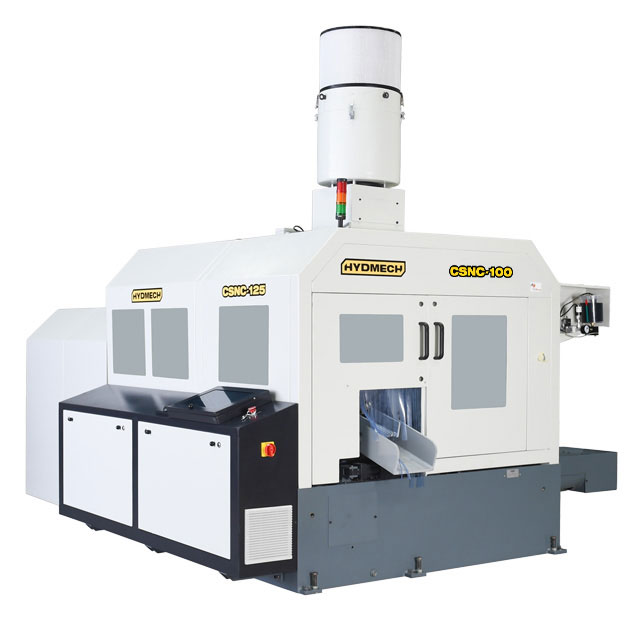
HYDMECH CSNC-100
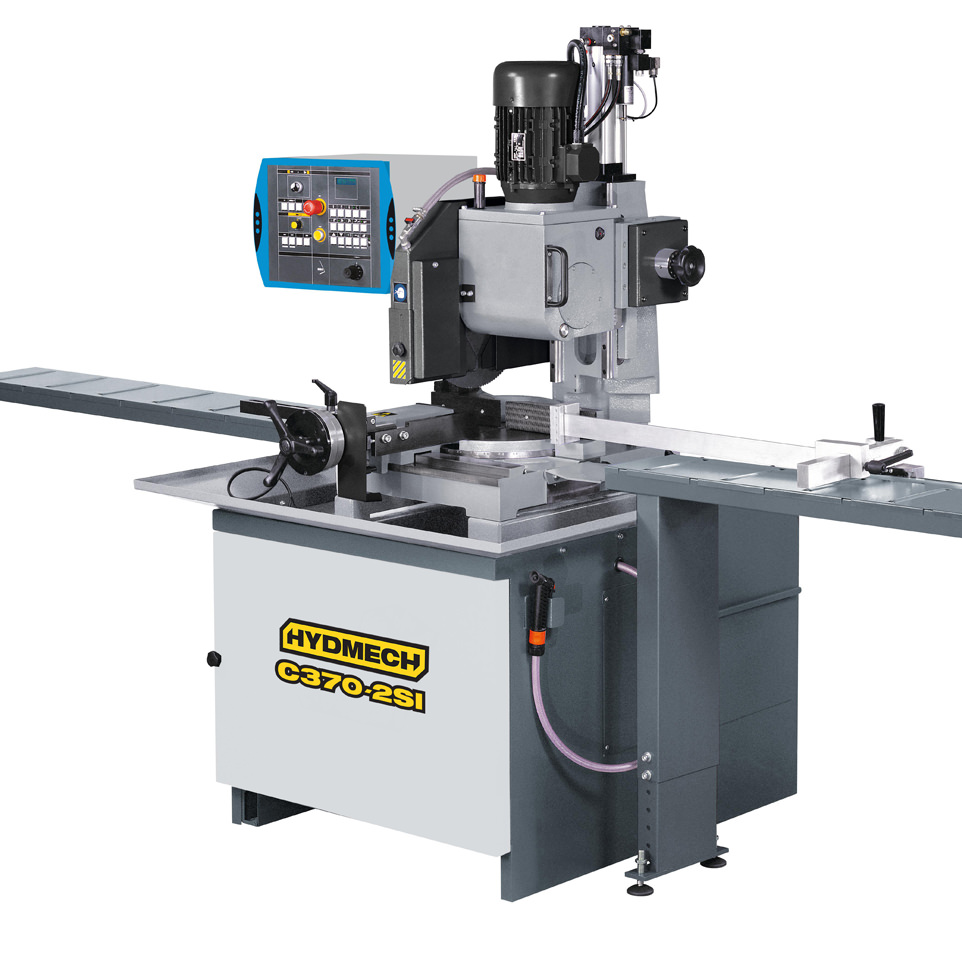
HYDMECH C370-2SI
Choose the Right Hydmech Saw Configuration to Maximize Throughput and Repeatable Cuts
A saw that is technically fast still loses to a slower saw if every job requires long setups and babysitting. Hydmech options let you match the configuration to your mix, whether that is bundles of tube, structural shapes, or a steady stream of cut-to-length bar. The goal is repeatable cuts with minimal operator intervention so your best people are not stuck doing tape-measure work.
For higher throughput, the right choice often comes down to how material is loaded and how lengths are controlled. If you are cutting a lot of the same profiles, adding infeed/outfeed support and a length stop system can make the saw feel like a different machine day to day. From an ROI standpoint, consistency matters as much as speed because it reduces downstream fit-up issues and rework.
Reduce Labor and Rework with Reliable Feeding, Clamping, and Length Control on the Floor
When I see re-cuts and rework from sawing, it is rarely because the blade is bad. It is usually inconsistent feeding, slippage in clamping, or operators compensating differently from shift to shift. Reliable material control tightens length tolerance, keeps corners from getting chewed up, and reduces the time welders spend forcing parts to fit.
Practical floor changes that pay back fast:
- Standardize blade selection and change intervals so cuts stay predictable
- Train operators on a simple first-piece routine and what numbers matter
- Keep air and coolant basics in check so performance does not drift mid-shift
- Use consistent infeed support to prevent droop and crooked starts
From a utilities standpoint, most saw cells need straightforward power and a clean air supply for clamping and actuators if your setup includes pneumatic features. The bigger win is labor stability: one operator can run more consistently, and your downstream stations stop building buffers to protect themselves from bad cut quality.
Stage Material for Smooth Downstream Work Using Practical Handling, Footprint, and WIP Control
If staging is not intentional, it becomes clutter, and clutter turns into lost time and late jobs. I recommend staging based on the next operation, not based on where there is open floor space. The best layout is usually a short, clear path from saw to the next cell with a defined WIP cap so parts do not pile up and hide problems.
Footprint matters here because every extra rack, cart, or random pallet steals crane swing and forklift lanes. A simple approach is to set a dedicated outfeed staging area sized to one to two hours of downstream demand, then keep the rest of the material in organized inbound storage. When you do this right, operators stop cherry-picking piles, and schedulers stop getting surprised by shortages that were really just buried inventory.
If you are also improving the cutting side of the shop, it can help to think about how laser-cut parts and saw-cut parts converge into forming and welding. That is where systems thinking pays off, and it is why I often point teams to practical equipment and layout ideas on our store site at https://shop.mac-tech.com/.
Protect Uptime and ROI with Maintainable Tooling, Service Access, and Operator Friendly Changeovers
ROI disappears fast when the saw is down, especially in winter when cold starts and neglected fluids make problems show up all at once. I always look at service access around the saw because a machine that is boxed into a corner will not get maintained the way it should. Give it room for blade changes, coolant checks, chip cleanout, and safe material loading, and uptime improves without adding headcount.
Operator friendly changeovers are another overlooked driver of throughput. If changing a blade, switching material size, or adjusting stops feels like a project, the team will delay it, and quality suffers. A few good habits like documented blade inventories, daily chip removal, and a simple weekly inspection routine prevent the slow performance fade that turns into downtime later.
Next Steps to Validate the Best Sawing and Staging Upgrade for Your Shop Layout and Mix
The most effective next step is a quick validation of your mix and your flow. We look at what you cut most, what your downstream stations consume per hour, and where the shortages originate, then we right-size the Hydmech sawing approach and the staging plan to match. That keeps the investment focused on throughput you can actually use, not theoretical capacity.
If you are evaluating broader prep improvements, it can also make sense to compare how sawing integrates with other upgrades like HSG fiber laser cutting, Prodevco automation, or Rytech material handling. When you treat prep as part of the system, the payoff shows up as smoother scheduling, fewer expedite jobs, and more predictable staffing. You can explore equipment and options anytime at https://shop.mac-tech.com/.
FAQ
Should I upgrade from plasma to fiber laser if my main pain is material prep?
Often yes if you are spending time on cleanup and rework, but sawing and staging fixes may be the faster first ROI. We can help you decide where the real bottleneck is before you invest.
When does automation make sense for sawing and material handling?
When you have repeat jobs, consistent profiles, or you are losing hours to forklift moves and manual measuring. Automation helps most when it reduces touchpoints and keeps downstream stations fed.
How much footprint do I need for a better saw and staging setup?
Plan for the saw plus safe infeed and outfeed lanes, then add a defined staging zone sized to your downstream demand. The goal is not more floor space, it is cleaner flow with fewer obstacles.
What basic power and air needs should I expect?
Most saw cells need standard industrial power and clean, dry air if you are using pneumatic clamping or accessories. We confirm specifics during layout review so there are no surprises during install.
How long does operator training usually take?
For most shops, a motivated operator can be productive quickly, then gets faster as setups become standardized. The real gain comes from consistent routines that make results repeatable across shifts.
What maintenance matters most for winter reliability?
Coolant health, chip management, and keeping moving components clean and lubricated are the big three. Winter downtime usually traces back to small daily tasks that got skipped during busy weeks.
Do you offer financing or trade-in support?
Yes, we can review financing options and potential trade-ins depending on the equipment and condition. The goal is to structure the upgrade so it matches your cash flow and ROI timeline.
If you want, send me your cut mix and a quick sketch of your current prep area and I will help you pressure-test the best next step at kyle@mac-tech.com or 414-704-8413, and you can also browse options at https://shop.mac-tech.com/.
Get Weekly Mac-Tech News & Updates
