
For shipyards, hull and bulkhead forming is no longer just a fabrication task. It is a strategic lever that directly affects delivery schedules, margins, and competitiveness in a market defined by tight tolerances and demanding project scopes. As President of Mac-Tech, I spend my time helping yards turn capital equipment decisions into long-term advantages, with Ermaksan press brakes playing a central role in how our marine customers plan investments, manage risk, and grow profitably.
Turning Hull Plate Forming into a Strategic Advantage with Ermaksan Press Brakes
Strategic Role of Hull and Bulkhead Forming:
- Hull plate accuracy drives downstream fit-up time, welding hours, and rework rates.
- Consistent forming tolerances support modular construction approaches and tighter project scheduling.
- High-tonnage forming capacity determines which jobs a yard can bid and how aggressively it can price large projects.
Ermaksan press brakes combine high tonnage with sophisticated controls that give shipyards a rare blend of brute force and precision. For large hull and bulkhead sections, programmable crowning, advanced CNC controls, and robust backgauge technology turn what used to be a highly manual art into a repeatable, data-driven process. That consistency becomes a strategic asset when you are managing multiple hulls and modules simultaneously.
Why Ermaksan Press Brakes Fit Marine Fabrication:
- High-tonnage frames handle thick ABS and other classed plate without compromising accuracy over long bends.
- Programmable crowning compensates for deflection across the full bed length, critical on wide hull plates.
- Multi-axis backgauges give operators precise control on complex bends, reducing layout time and operator guesswork.
At Mac-Tech, my team and I look at these capabilities not just as technical specs, but as tools to change the economics of hull forming. When large-plate bending becomes predictable, you gain negotiating power with customers, confidence in delivery dates, and the ability to standardize processes across hull classes.
Quantifying ROI: Throughput, Accuracy, and Labor Efficiency in Large-Plate Bending
Investment Timing Considerations:
- Align major press brake purchases with fiscal year-end and Section 179 planning to accelerate depreciation benefits.
- Weigh leasing versus purchase based on yard utilization forecasts and backlog visibility over the next 3–5 years.
- Consider phased automation options so your ROI ramps as volume grows.
Ermaksan press brakes support higher throughput and more consistent quality on large plate, which translates directly into ROI. Shorter setup times and fewer trial bends free up skilled operators to focus on critical tasks rather than rework. When we run models for clients, we usually see large-plate bending capacity show up in the P&L through faster project turns and better labor utilization.
Operational Impact:
- Faster turnaround on hull sections and bulkheads reduces work-in-process and improves cash conversion cycles.
- CNC programs for repeat hull designs compress setup times between projects and vessel classes.
- Reduced dependency on highly specialized forming talent makes staffing more predictable and scalable.
Quantifiable ROI Drivers with Ermaksan Marine Applications:
- Fewer forming passes per plate due to accurate tonnage and crowning settings.
- Lower rework and weld-fit correction costs because plates arrive to assembly closer to nominal.
- Shorter learning curve for new operators through intuitive control interfaces and stored programs.
From my perspective, the key to justifying a high-tonnage Ermaksan is looking past the machine sticker price and into the total cost of hull construction. If you are shaving hours off each major plate and eliminating full days of rework over a hull build, the press brake quickly moves from expense to profit center.
Reducing Rework and Scrap: Precision Controls that Protect Margins on Complex Hulls
Precision Controls that Matter for Hull Fabrication:
- Programmable crowning to keep bend angles consistent along the entire length of the plate.
- Multi-axis backgauges that support complex bend sequences on tapered and curved components.
- High-resolution encoders and robust hydraulic systems that deliver repeatable bend angles over long runs.
In shipbuilding, rework and scrap are margin killers, especially on thick, expensive plate. With Ermaksan, the combination of tonnage capacity and fine control means you can bend long hull panels, webs, and deep girders to consistent angles without overforming or underforming sections. That precision reduces the misalignment that shows up later at welding and fit-up.
Margin Protection Through Better First-Pass Yield:
- Accurate bending minimizes the need for torch correction and in-yard straightening.
- Less scrap on large plates protects against costly material write-offs on specialty grades.
- Stable forming processes increase confidence in production estimates and bid pricing.
When I walk yards that rely on older or underpowered equipment, I typically see informal workarounds to compensate for inconsistent forming. Those improvisations become hidden costs. Moving to Ermaksan with programmable crowning and CNC-controlled backgauges is often the fastest way to pull those costs back into the black.
Aligning CapEx with Yard Growth Plans: Scalable Press Brake Configurations for Future Demand
Capital Planning Insights:
- Size your first Ermaksan press brake for 80–90 percent of your current plate range, with clear upgrade paths.
- Plan for staged increases in bed length, tonnage, or backgauge complexity as hull sizes and project scopes expand.
- Use depreciation schedules and projected backlog to time expansions without overextending cash flow.
Ermaksan’s platform approach lets us configure machines that match a yard’s current demand, while keeping space and power ready for future capacity. Some clients start with a high-tonnage, moderate-length machine targeted at common hull plates, then scale up to longer beds as they pursue larger vessels or modular block construction. The goal is to avoid having your forming capacity become a bottleneck just as your order book grows.
Growth-Oriented Configuration Strategies:
- Standardized control platforms across multiple Ermaksan brakes simplify training and program sharing.
- Options for additional axes in the backgauge or upgraded CNC can be timed with new contracts or program awards.
- Planning for foundation, crane access, and material flow during the initial installation avoids expensive retrofits later.
My role at Mac-Tech is to help shipyards match their CapEx cadence to their growth curve. That often means pairing a near-term press brake investment with a roadmap for added automation, better nesting, or complementary equipment such as plate lasers or plasma systems from partners like HSG. All of this is built around your backlog forecasts and strategic vessel segments.
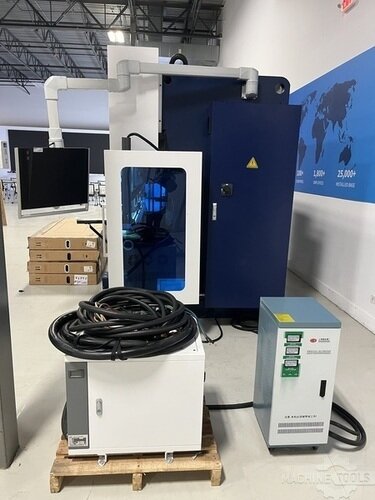
HSG HC1703
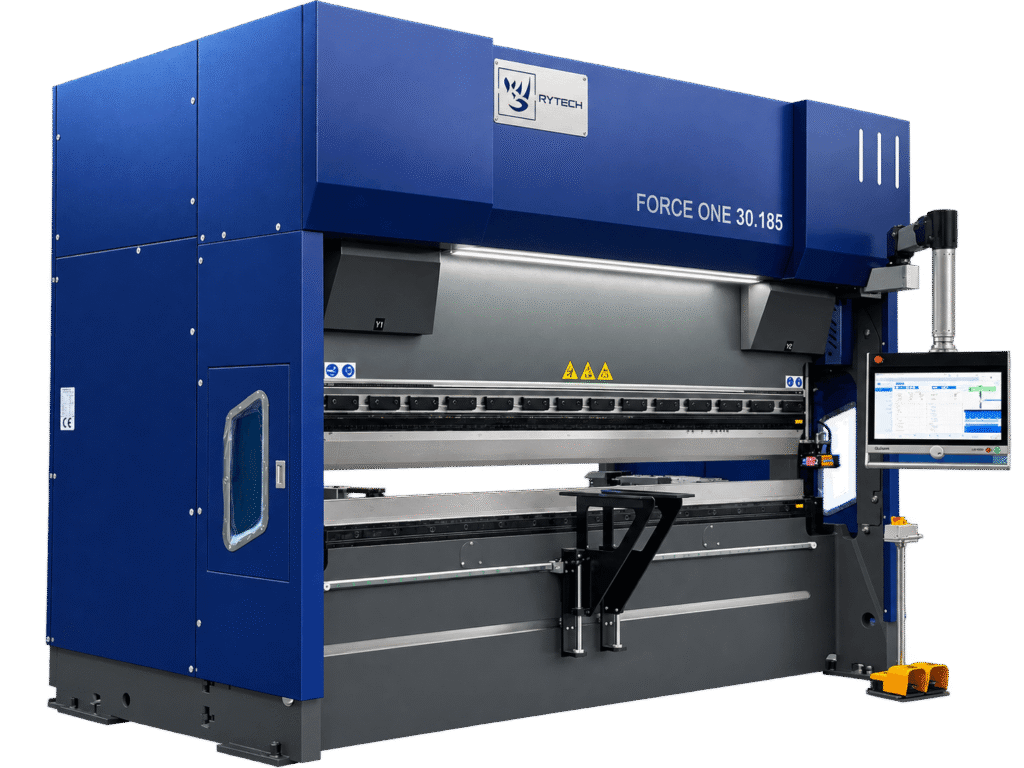
RYTECH FORCE ONE HYDRAULIC PERFORMANCE PRESS BRAKE
The RYTECH FORCE ONE Hydraulic Performance Press Brake combines heavy-duty construction, advanced CNC controls, and proven hydraulic technology for accurate, reliable bending. Featuring Precision…
Digital Integration and Automation: Connecting Ermaksan Press Brakes to Yard-Wide Production Systems
Integration Priorities for Modern Shipyards:
- Tie press brake programs into CAD/CAM workflows so hull plate designs move cleanly from engineering to forming.
- Connect Ermaksan controls to yard MES or ERP systems for real-time tracking of job status and machine utilization.
- Coordinate with other digital assets such as HSG lasers, robotic coping systems, or automated weld lines.
Ermaksan’s CNC platforms are built to live inside a connected yard. That means offline programming, networked job scheduling, and data capture on throughput and quality metrics. When we integrate press brakes with other plate and structural systems, fabricators start to treat forming data as a strategic input for continuous improvement.
Automation and Handling Enhancements:
- Automated or assisted backgauge systems reduce manual measurement and positioning on large, heavy plates.
- Front and rear support devices help manage long panels, reducing operator fatigue and risk.
- Future-ready configurations allow for integration with robotic plate handling or AGVs as yards move deeper into automation.
Automation is not an all-or-nothing decision. I advise clients to pair their Ermaksan investment with incremental automation steps that yield rapid ROI, such as improved material handling or standardized digital workflows. Done right, this positions your yard to scale into higher levels of robotics and integrated systems when project volume and labor markets demand it.
How Mac-Tech De-risks Technology Adoption and Supports Lifecycle Performance in Shipyard Operations
Reducing Risk During Evaluation and Implementation:
- Detailed application reviews that match Ermaksan models to your specific plate sizes, grades, and hull geometries.
- On-site or remote productivity studies that translate technical specs into expected hours saved and rework avoided.
- Coordination with finance partners to align payment structures with project milestones and cash-flow realities.
New forming technology in a shipyard environment must work on day one and keep working. At Mac-Tech, we focus on installation planning, operator training, and realistic performance targets, so the transition from legacy methods to Ermaksan is smooth. My team is involved throughout, ensuring that what looked good in a proposal delivers in your shop.
Lifecycle Support and Performance Protection:
- Preventive maintenance programs tuned to shipyard duty cycles and tonnage loads.
- Spare parts strategies that minimize downtime, especially for high-tonnage and long-bed machines that are single points of failure.
- Ongoing training for operators and supervisors as you introduce new plate types, hull designs, or automation steps.
De-risking is not just about the first year. It is about maximizing productive uptime across the full lifecycle of your investment. My commitment, and Mac-Tech’s, is to be a long-term partner in how you use Ermaksan and other advanced fabrication systems to win work, protect margins, and adapt to changing market conditions.
FAQ
What financing options are available for large fabrication systems?
Mac-Tech assists clients in structuring capital or lease agreements that balance cash flow and tax benefits.
How can automation improve ROI in 12–24 months?
By reducing manual handling, rework, and setup time, which are key drivers of hidden cost savings.
What are current trends in heavy fabrication demand?
Public infrastructure, naval and coast guard programs, and offshore energy projects continue to drive plate and structural demand.
How does Mac-Tech help with integrating Ermaksan presses into existing systems?
We coordinate with your IT, engineering, and operations teams to connect CNC controls to your CAD/CAM, MES, and ERP platforms.
When is the right time to upgrade or add another press brake?
When forming becomes a schedule constraint, rework rates increase, or new projects require thicker or longer plate than your current capacity.
Can press brake investments qualify for Section 179 or bonus depreciation benefits?
In many cases yes, and we work with your financial team to time purchases for optimal tax treatment.
How resilient are Ermaksan press brakes in high-duty shipyard environments?
They are designed for heavy-duty use, and with proper maintenance and support from Mac-Tech they provide reliable uptime over long service lives.
I welcome the opportunity to talk through your hull-forming strategy, capital plans, or specific project requirements. Contact me directly at joe@mac-tech.com or 414-477-8772, and let us explore how Ermaksan press brakes and Mac-Tech’s support can strengthen your shipyard’s performance and profitability.
Get Weekly Mac-Tech News & Updates
