
A Monday start becomes a scramble when a fiber laser stops mid-shift with a high-temp alarm and the chiller’s flow indicator bouncing low. The root cause is often straightforward, such as a clogged return filter, a leaking pump seal, or a drifted flow sensor. I help shops stabilize quickly by confirming the exact HSG chiller configuration, identifying the correct OEM pump and filter set, and coordinating a clean swap that restores flow and protects the cutting head. My focus is always the same: confirm the fault, get the right parts on-site, and guide the team so production resumes with minimal rework or risk.
Chiller Failures on HSG Fiber Lasers Require Prompt OEM Pump and Filter Replacement
Loss of coolant flow or rising outlet temperature puts the HSG head and oscillator at risk. The usual culprits are debris saturation in the filter, cavitation from a worn pump, incorrect coolant mix, or a sensor reading outside spec. Electrical issues such as a failing pump capacitor or contactor can also cause intermittent flow and nuisance alarms.
Typical affected parts and fixes:
- OEM circulation pump, including shaft seal and mounting gasket. Replace as a complete assembly if noise, heat, or low flow persists after priming.
- Return and inline filters or strainers. Replace clogged filter media, clean Y-strainers, verify differential pressure returns to normal.
- Flow sensor and temp probes. Calibrate or replace if readings are unstable or out of tolerance.
- Hoses, clamps, and reservoir cap. Renew if seepage, kinking, or vacuum leaks are present.
Key symptoms that confirm pump or filter issues:
- Flow alarm during ramp-up, slow recovery of setpoint temperature, or frequent over-temp faults.
- Pump runs hot to the touch, audible bearing grind, or cavitation chatter.
- High differential pressure across the filter, visible sludge or darkened media.
Why OEM pump and filter units matter on HSG systems:
- Correct flow and head pressure matched to the laser head and oscillator interlocks.
- Proper electrical characteristics and fittings that align with HSG chiller manifolds.
- Maintains warranty compliance and ensures sensor thresholds behave as intended.
Rapid triage steps I guide on-site:
- Record inlet and outlet temperatures, actual flow reading, and filter delta-P.
- Verify coolant level, mixture, and conductivity, then prime the pump and purge air.
- Inspect for leaks, collapsed hoses, blocked condenser fins, and dirty air filters.
- If flow remains low, replace the OEM pump and filter together to prevent repeat trips.
Preventive Maintenance and Worn Component Identification Extend Chiller Life and Avoid Downtime
Unplanned stoppages are preventable when filters are changed on hours, coolant quality is held within spec, and wear items are replaced before failure. I plan these tasks with maintenance leads and align them with production changeovers to reduce impact.
Inspection intervals that work on HSG chillers:
- Filters: check every 250 hours, replace at 500 hours or sooner if delta-P is high.
- Coolant: test monthly for concentration and conductivity, replace every 12 months or after a contamination event.
- Pump: vibration and amp draw check quarterly, replace seals at first signs of weep.
- Condenser coils and intake screens: clean monthly, weekly in dusty environments.
- Sensors and safeties: verify flow and temp calibration every 6 months.
Signs a pump or filter is at end of life:
- Increasing current draw at constant flow setpoint.
- Flow fluctuations after a normal purge and priming.
- Persistent temp overshoot despite clean condenser and correct coolant.
Coolant quality control I recommend:
- Use deionized or RO water with the OEM-approved glycol blend, typically 20 to 30 percent.
- Maintain conductivity within the chiller’s specified range, add biocide only if OEM-approved.
- Flush lines when switching coolant types or after pump failure to remove fines.
Prevention strategies I apply:
- Replace filters during scheduled lens cleanings to combine downtime.
- Log trend data for flow, delta-T, and pump amps to catch early drift.
- Keep spares on hand: one OEM pump kit, two filter sets, common seals and clamps.
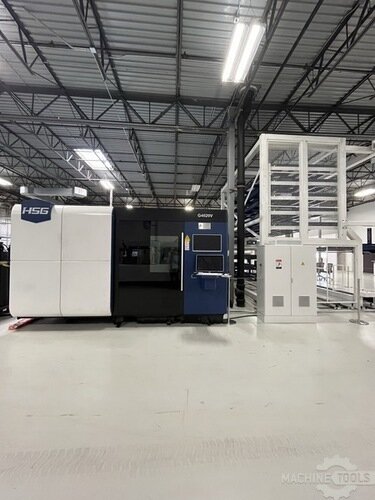
HSG G4020V 6G 30KW + STORE 4020 6
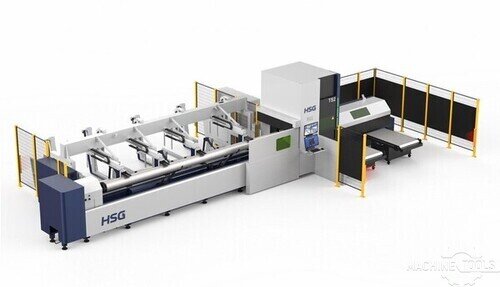
HSG TS2 HIGH SPEED TUBE FIBER LASER CUTTING MACHINE
Nicole Salato Leads Mac-Tech Parts Sourcing and Coordinated Service to Keep Production Running
When an HSG laser throws a chiller alarm, response time and part accuracy decide whether you lose hours or minutes. I validate the chiller model and serial, confirm the OEM pump curve and filter media, and coordinate on-site or remote support so the changeout happens cleanly the first time. For multisite operations, I standardize PM kits and checklists so each facility uses the same procedures and spares.
How I coordinate your recovery:
- Remote triage to confirm root cause and stabilize the machine safely.
- Ship the correct OEM pump and filters, plus ancillary seals and clamps, in one kit.
- Provide step-by-step installation guidance, purge and flow verification, and alarm reset.
- Document baseline readings for trend comparison and future PM scheduling.
Mac-Tech supports more than lasers. I also assist teams running Hydmech saws, Ermaksan press brakes, Akyapak rolls, Prodevco automation, Rytech equipment, and Wilson Tool applications, aligning parts and service so your shop standardizes maintenance across the floor.
Fast Parts and Service Support Are Available From Nicole Salato at nicole@mac-tech.com
If your HSG laser is derating power or tripping on high temperature, I can get you the correct OEM pump and filter set same day whenever possible and coordinate installation support. Email me photos of the chiller data plate, pump tag, filter housings, current alarms, and your coolant type to accelerate verification.
To speed resolution, include:
- Machine and chiller models, serial numbers, and hours on the pump and filters.
- Current flow rate, inlet and outlet temperatures, and ambient conditions.
- Any leak points noted, recent coolant changes, and maintenance performed.
- Your production window so I can align parts arrival with technician availability.
A quick OEM swap protects the cutting head and oscillator, restores stable flow, and keeps your schedule intact.
FAQ
How often should press brakes be serviced?
Press brakes should receive a hydraulic inspection and oil change every six months or 1,000 operating hours.
How can I tell if my laser needs optics replacement?
Watch for inconsistent cutting speed, wider kerf, or visible lens haze.
Does Mac-Tech provide parts for older machines?
Yes. Nicole verifies compatibility and supports service for both current and legacy models.
When should HSG chiller filters be replaced?
Inspect at 250 hours and replace by 500 hours or sooner if differential pressure is high.
What coolant mix do you recommend for HSG chillers?
Use RO or DI water with OEM-approved glycol, typically 20 to 30 percent, and maintain conductivity in spec.
What are early signs a chiller pump is failing?
Rising amp draw, intermittent flow alarms, cavitation noise, and heat at the pump housing.
Are OEM pumps and filters worth it over aftermarket?
Yes. OEM units match flow, pressure, and electrical specs, keeping interlocks stable and protecting the head.
I am ready to help. Contact me at nicole@mac-tech.com to coordinate service, schedule preventive maintenance, or get the correct OEM parts on your dock.
Get Weekly Mac-Tech News & Updates
