
I’m Kyle Bialozynski, a Sales Executive at Mac-Tech, and I’ve spent a lot of time on shop floors across the Midwest where people show up early, keep the line moving, and fix what’s broken without making excuses. The most common ROI killer I see is not the machine itself, it’s everything around it: long setups, parts getting carried three times, plasma cleanup eating labor, and bottlenecks where cutting outruns deburr or bending. Add winter uptime headaches and suddenly that shiny upgrade is sitting idle while your team fights fires.
Track Setup and Changeover Time So the Machine ROI Shows Up on the Floor
A faster machine only pays you back if it is cutting parts instead of waiting on setup, material, programs, or the next job’s tooling. In a lot of shops, changeovers are treated like a mystery instead of a metric, so time disappears in small chunks that never get fixed.
The practical move is to track setup and first-good-part time by job family, then standardize what you can: common nests, repeatable zero points, and staged material. If you are upgrading cutting, an HSG fiber laser is a strong fit when your goal is consistent cycle time with less babysitting, but it still needs a clean material staging lane and a simple checklist for lens, nozzles, and assist gas so the next shift can repeat the result. From a utilities standpoint, plan for stable power, dry air for pneumatics where needed, and space for safe infeed and outfeed so you are not lifting sheets in tight corners.
Cut Deburr and Rework by Controlling Edge Quality and Process Repeatability
If your edge is inconsistent, you pay twice: once at the cut table, and again when people grind, flap-disc, and rework before forming or welding. Plasma cleanup is the classic example, where dross and heat-affected edge quality create a hidden deburr department that nobody scheduled.
Moving from plasma to fiber laser often cuts deburr time dramatically because the edge is cleaner and repeatable, especially on mild steel and stainless parts that go straight to bending or welding. When you do need finishing capacity, match it to flow so it does not become the new bottleneck, and train operators on simple edge-quality checks so bad parts do not travel downstream. For welding-related touch labor, a LightWELD handheld system can help when the goal is faster, cleaner welds with less post-grind, but the biggest win still comes from consistent fit-up and part edges upstream.
Build Scheduling Discipline Around Real Cycle Time, WIP Limits, and On-Time Shipments
A schedule that ignores real cycle time creates chaos even with great equipment, because jobs get pushed, WIP piles up, and hot parts steal labor from everything else. Most shops do not have a machine problem, they have a flow problem, where cutting runs ahead and work-in-process blocks aisles and press brake staging.
The fix is boring but powerful: schedule using actual run data, limit WIP between steps, and release work only when downstream has capacity. That might mean pairing an HSG laser with the right level of automation only after you have stabilized deburr and bending, or adding a Hydmech saw where band saw throughput is quietly delaying welding kits. The day-to-day impact is fewer piles on carts, fewer expeditor interruptions, and more predictable on-time shipments.
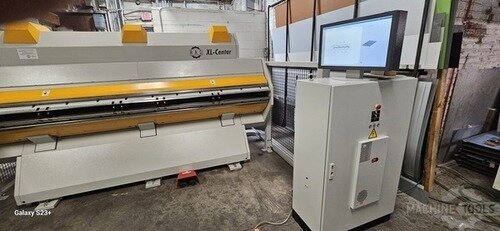
RAS XL CENTER 63-30
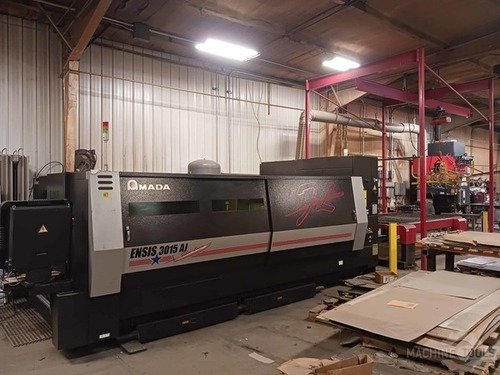
AMADA ENSIS 3015 AJ FIBER
Reduce Touch Labor With Smarter Material Handling, Part Flow, and One-Piece Movement
Every time a part gets lifted, carried, flipped, stacked, unstacked, or hunted down, you burn labor that never shows up in the machine brochure. Touch labor also increases damage, mixed parts, and safety risks, especially when people are moving sharp laser or plasma blanks around tight spaces.
The practical approach is to design a simple, straight-line flow: receive and stage material near cutting, route parts to deburr and forming with minimal crossing traffic, and use one-piece or small-batch movement for priority jobs. If tube and pipe are part of your mix, a Rytech tube laser can reduce handling by combining cut, cope, and marking so assemblies fit faster at weld, but it needs a clear footprint for bundle loading and a plan for drop management. Keep utilities simple and reliable with clean, dry air where required and preventive maintenance habits like daily cleaning and weekly checks so winter condensation and dirty air do not create downtime.
Next Steps for a Smarter Shop Upgrade That Protects Uptime and Floor Space
Before you buy anything, map your current process from material receipt to shipment and identify where time is lost to handling, deburr, and waiting. Then right-size the upgrade so the new machine does not outpace the next operation, or force you to add headcount just to keep up with carts and grinding.
If you want a practical starting point, I often recommend reviewing upgrade options alongside tooling, consumables, and layout constraints so you protect floor space and uptime from day one. You can browse equipment and shop needs here: https://shop.mac-tech.com/ and we can talk through what fits your mix, your footprint, and your staffing reality.
FAQ
Is upgrading from plasma to fiber laser really worth it for ROI?
Yes when deburr, rework, and scheduling stability matter, because edge quality and repeatability usually reduce touch labor and downstream delays.
When should I add automation to a laser or tube line?
Add it after you have stable programming, staging, and downstream capacity, otherwise automation just feeds a bigger WIP pile.
What footprint, power, and air considerations should I plan for in plain terms?
Plan for safe infeed and outfeed space, stable electrical service sized to the machine, and clean, dry compressed air where pneumatics are used.
How long does operator training typically take for a new cutting system?
Most teams get comfortable in days to a couple of weeks, especially if you standardize setups and use simple daily checklists.
What maintenance habits help winter reliability the most?
Keep air dry, keep optics and wear parts clean, and follow daily and weekly checks so condensation and debris do not cause nuisance faults.
Can you help with financing or trade-ins?
Yes, we can talk through financing and trade-in options so the upgrade fits the cash flow and the real production need.
If you want to sanity-check an upgrade plan against handling time, deburr capacity, and scheduling reality, reach out anytime at kyle@mac-tech.com or 414-704-8413, or browse options at https://shop.mac-tech.com/.
Get Weekly Mac-Tech News & Updates
