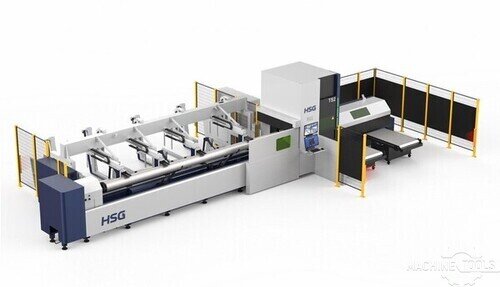
In the fast-evolving world of structural steel fabrication, industries like oil & gas, bridge building, and shipbuilding are under immense pressure to enhance precision and efficiency. As your trusted advisor and single point of contact at Mac-Tech, I am dedicated to providing turnkey solutions that drive your business forward. Among these solutions, high-power HSG lasers are revolutionizing tube cutting by delivering cleaner edges and reducing secondary work. Let’s explore how upgrading to HSG lasers can maximize your ROI and keep you competitive.
Introduction: The Need for Precision in Structural Steel Fabrication
Precision is not just a buzzword; it’s a necessity. In industries where structural integrity and aesthetics are paramount, even the smallest error can lead to costly setbacks. Manual methods and outdated machinery struggle to meet today’s demands for accuracy and speed. That’s where I come in, offering advanced solutions like HSG fiber lasers to enhance your operational capabilities.
Understanding the Role of Automation in Enhancing Efficiency
Automation is transforming the steel fabrication landscape by reducing reliance on manual labor and minimizing human error. By integrating HSG lasers into your workflow, you can automate repetitive tasks, streamline processes, and improve lead times. I work closely with suppliers and internal teams to ensure seamless integration, so your transition to automated precision cutting is smooth and hassle-free.
Why Upgrade? The Advantages of HSG Fiber Lasers
HSG fiber lasers offer a host of benefits over traditional plasma cutting. They deliver superior edge quality, requiring less post-processing and producing minimal waste. By upgrading, you not only improve product quality but also significantly reduce operational costs. Additionally, HSG lasers have a smaller footprint and lower energy consumption, making them a sustainable choice for modern fabricators.
Maximizing ROI: Cost-Benefit Analysis for Oilfield and Shipyard Operations
Investing in high-power HSG lasers is a strategic decision that offers substantial returns. For oilfield and shipyard operations, the precision and efficiency of these lasers translate to faster project completion and reduced labor costs. With the Section 179 deduction available until year-end, Arizona shops can further enhance their ROI by reducing taxable income while modernizing their equipment.
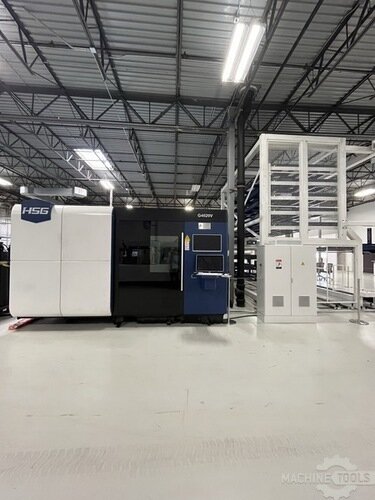
Case Studies: Success Stories in Bridge and Tower Fabrication
Across the country, fabricators are reaping the benefits of HSG lasers. In bridge and tower fabrication, companies have reported increased throughput and improved structural accuracy. These success stories highlight how upgrading equipment not only meets current demands but also positions businesses to lead in a competitive market.
Contact Dave Graf: Your Guide to Cutting-Edge Solutions
Navigating the complexities of equipment upgrades can be daunting. As your guide to cutting-edge solutions, I am here to simplify the process. From initial consultation to installation and beyond, I ensure your investment delivers exceptional value and performance.
FAQ Section
What are the key performance specifications of HSG lasers? HSG lasers offer high precision, superior edge quality, and increased cutting speed, making them ideal for various fabrication needs.
How long does the integration process take? The integration timeline varies, but I coordinate with suppliers for a streamlined process, ensuring minimal disruption to your operations.
What criteria should I consider when purchasing? Consider factors such as power output, cutting thickness, energy efficiency, and automation capabilities to match your production goals.
Can HSG lasers be customized for specific applications? Yes, HSG lasers can be tailored to meet specific industry requirements, providing a versatile solution for diverse fabrication tasks.
What kind of support does Mac-Tech offer post-installation? We offer comprehensive training and ongoing support to ensure you fully leverage your investment in HSG technology.
Is there a way to see the equipment in action before purchasing? Absolutely, I can arrange demonstrations to showcase the capabilities of HSG lasers and how they fit into your operations.
What are the lead times for delivery and installation? Lead times depend on the specific model and customization needs, but I manage the process to align with your project timelines.
Sales & Service Specialist, Mac-Tech
dave@mac-tech.com
In my role at Mac-Tech, I’m dedicated to helping our customers identify areas for improvement that will increase efficiencies, productivity, and profitability. With a wealth of resources at my disposal—machines, products, technology, parts, and an experienced team—I ensure that our clients have everything they need to succeed.
My expertise spans flat and tube lasers, beam line robotic coping, press brakes, and tube bending. I take a relationship-oriented, consultative approach to sales, focusing on finding solutions that meet our customers’ specific needs and ensuring their satisfaction throughout the process. I stay involved from start to finish, always available to address any concerns.
One of my proudest achievements was helping a client transition from relying heavily on outside processing to bringing production in-house. This shift allowed them to control manufacturing timelines and capture profit margins they had previously been losing. Additionally, by replacing six manual positions with one machine, the client was able to redeploy their workforce, further increasing productivity and efficiency.
If you’re looking to optimize your production process or need expert advice on metal fabrication equipment, I’m here to help. Feel free to reach out to discuss your needs.
In the article, Dave Graf, Regional Sales Executive at Mac-Tech, discusses how CNC-controlled Akyapak systems significantly enhance forming efficiency and ROI in industries like oil & gas, shipbuilding, bridge, and tower construction. By providing end-to-end automation solutions, these systems streamline structural steel fabrication processes, reducing labor costs and improving precision. Executives in these sectors can leverage these advanced technologies to increase productivity and profitability. For more information, contact Dave Graf at dave@mac-tech.com or 602-510-5552.
Dave Graf explains how heavy fabrication shops can raise throughput reliability by planning line layouts around end-to-end automation, from material handling and cutting to drilling, welding, and finishing. The article emphasizes integrating equipment, software, and workflow to reduce bottlenecks, rework, and downtime while improving safety and predictability. Targeting structural steel fabrication for oil and gas, shipbuilding, bridges, and tower construction, it outlines how disciplined planning and integration deliver measurable ROI through higher utilization, faster cycle times, and scalable capacity. Dave Graf Regional Sales Executive, Mac-Tech dave@mac-tech.com | 602-510-5552
Dave Graf outlines how high throughput cell utility safety validation improves reliability and profitability in structural steel fabrication. The article emphasizes end-to-end automation planning that aligns equipment selection, utilities, safety systems, and workflows to reduce downtime and accelerate commissioning. By integrating cutting, welding, and material handling with validated safeguards and standardized verification, fabricators in oil and gas, shipbuilding, bridge, and tower construction can achieve predictable throughput and measurable ROI through lower risk, higher uptime, and scalable expansion. Dave Graf Regional Sales Executive, Mac-Tech dave@mac-tech.com | 602-510-5552
Dave Graf outlines how commissioning playbook acceptance tests de-risk automation in structural steel fabrication by validating uptime, safety, and throughput before full production. The article emphasizes end-to-end planning that aligns equipment selection, controls, and data integration with real shop workflows across oil and gas, shipbuilding, bridge, and tower projects. By standardizing test criteria and stakeholder signoff, fabricators can accelerate ramp-up, reduce rework, and quantify ROI through predictable capacity, labor efficiency, and higher-quality output. Dave Graf Regional Sales Executive, Mac-Tech dave@mac-tech.com | 602-510-5552
Dave Graf explains how investing in high-watt fiber lasers for thick plate can pay off only when paired with end-to-end automation planning and disciplined ROI validation. He highlights integration risks in material handling, nesting, cut quality, downstream fit-up, and throughput, urging fabricators to align equipment choices with real production constraints. The article emphasizes practical integration support to reduce payback uncertainty for structural steel shops serving oil and gas, shipbuilding, bridge, and tower construction. Dave Graf Regional Sales Executive, Mac-Tech dave@mac-tech.com | 602-510-5552
Dave Graf outlines a practical framework for comparing Liberty and Ermaksan press brakes by linking capacity, uptime, and total cost to measurable ROI in structural steel fabrication. He emphasizes end-to-end automation planning, from part flow and tooling to controls, safety, and data connectivity, ensuring press brakes integrate cleanly with existing lines. The approach targets higher throughput and predictable performance for oil and gas, shipbuilding, bridge, and tower construction with clear payback modeling. Dave Graf Regional Sales Executive, Mac-Tech dave@mac-tech.com | 602-510-5552