HYDMECH CSNC-65 Chip-Brush Maintenance
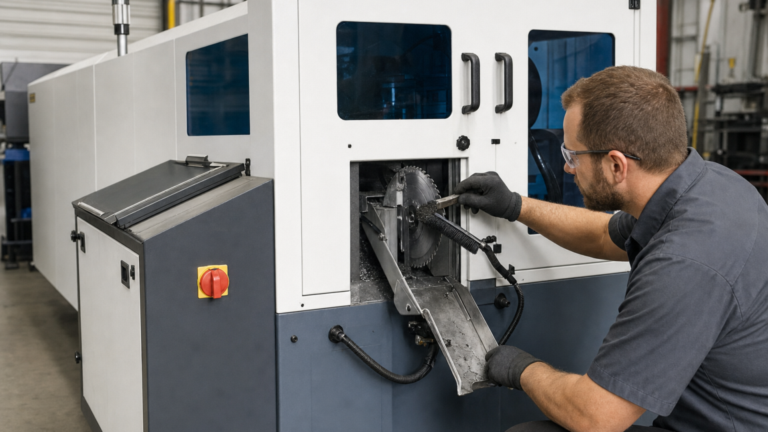
A working chip auger does not prove that CSNC-65 blade teeth are clean. Separate brush condition, lubricant delivery and chip location before choosing cleaning, replacement or service.

A working chip auger does not prove that CSNC-65 blade teeth are clean. Separate brush condition, lubricant delivery and chip location before choosing cleaning, replacement or service.
BLM’s expanded Novi training center adds a 17,000-square-foot machine bay with LT6, LT7, and LT8 tube lasers. Its announced capacity of up to eight machine-training classes per week is not a guarantee of a particular course or open seat.
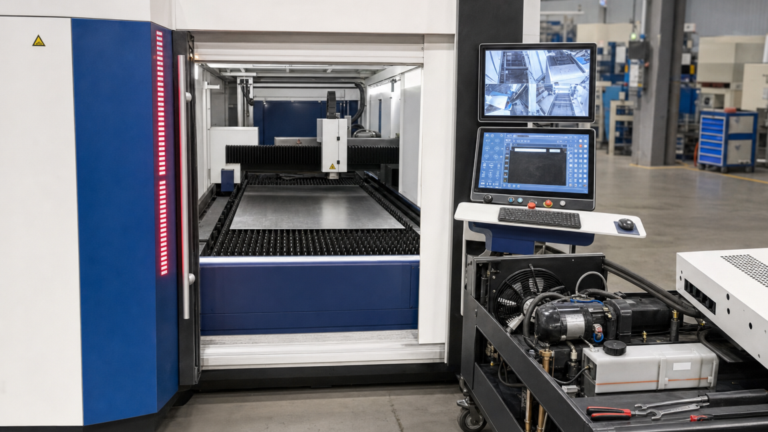
Maintain heat rejection, coolant circulation and condensation control on the HSG G3015XPRO 20KW. Lower coolant temperature is not automatically safer.
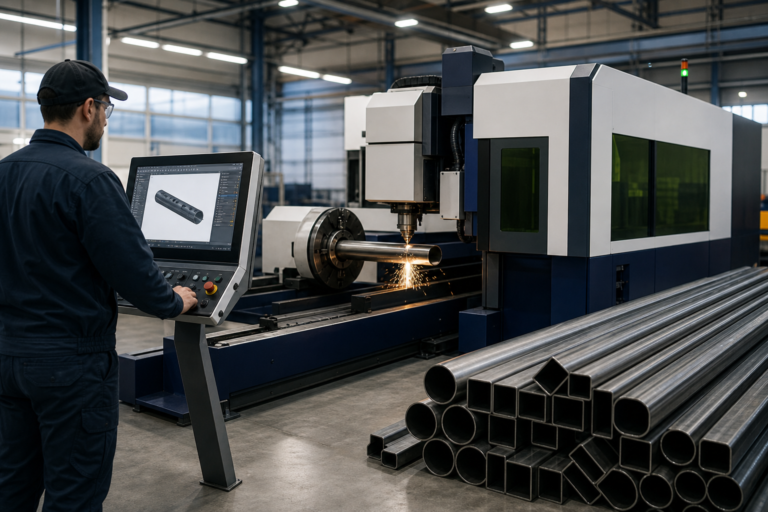
Used CNC tube lasers can still deliver value in 2026 when proven capacity, safety, software, and support fit the work. Compare representative-part performance and ready-to-produce costs against new automation, profile handling, and bevel capabilities.
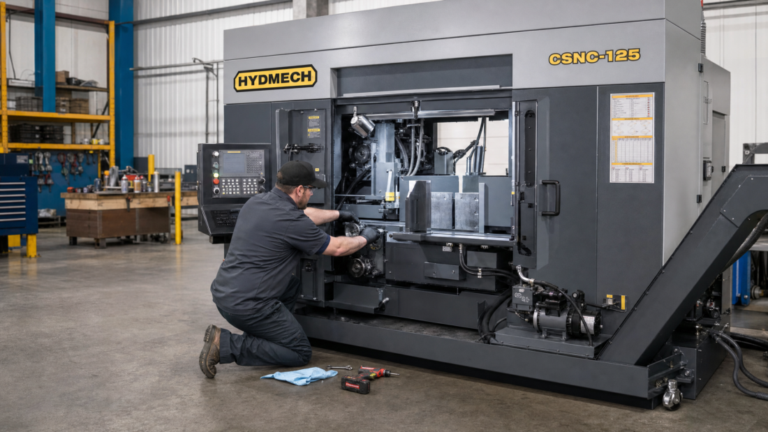
The HYDMECH CSNC-125 automates lubrication, coolant-level alarming, feeding, chip removal, sorting, and production monitoring, but maintenance personnel still must verify delivery, inspect wear, manage fluid condition, review trends, and release the saw safely after applicable service work.
Before asking for an HSG ALG replacement part or service support, build a record that identifies the installed automation system, captures the observed condition and alarm history, and separates a documented request from an assumed diagnosis.
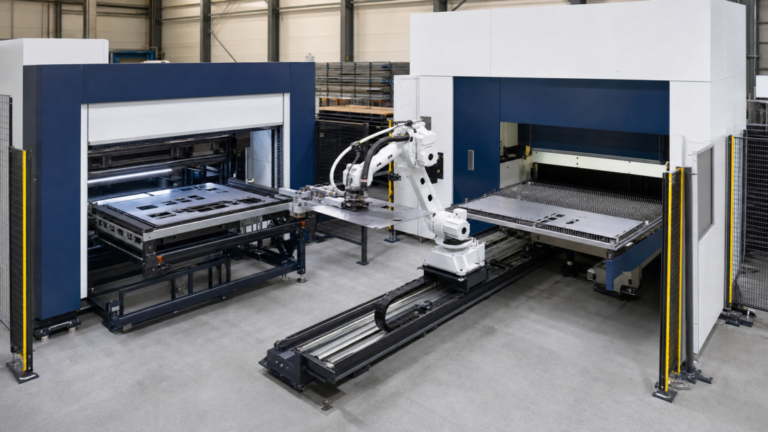
A multi-machine line is not ready for layout approval until each handoff defines part state, handling path, buffer behavior, control authority, recovery, access, and acceptance responsibility.
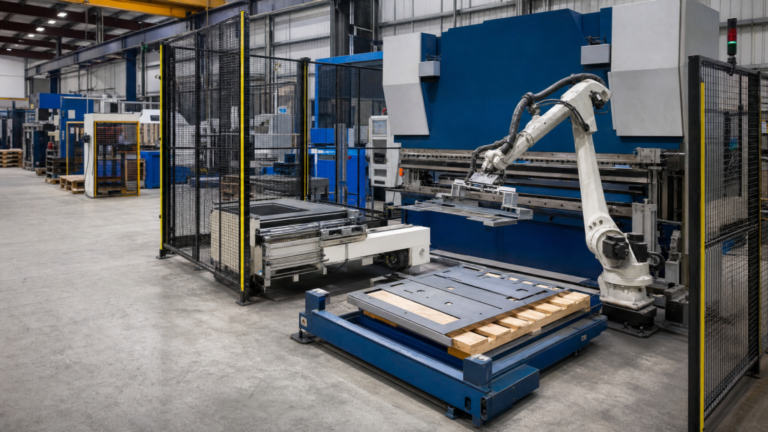
A first folder-handoff project should be defined by approved part families, orientation, support, control states, and recovery paths—not by a robot brand or headline cycle rate.
A forming line is not finished at cutoff. When stack condition, protection, counts, labels, pallet patterns, and shipping release slow finished-goods flow, define the shipping unit first and scope automation backward from there.
End of content
End of content