
Saws Still Set the Pace for Fabrication Shops
For many fabrication facilities across Wisconsin, Illinois, Michigan, and the broader Midwest, sawing is the first critical step in production. Whether you’re processing structural steel, aluminum components, automotive parts, or heavy equipment weldments, your saw determines downstream efficiency.
If cuts are inconsistent, slow, or labor-intensive, everything that follows—drilling, coping, bending, welding, or machining—feels the impact. That’s why more production managers are re-evaluating their sawing strategy in 2026.
Automation and Repeatability Are Driving Upgrades
Manufacturers like HYDMECH continue to emphasize automation, programmable controls, and material handling integration in modern band saw systems (HYDMECH, hydmech.com). Automatic feed systems and programmable cut lengths reduce operator dependency and increase repeatability—especially valuable in high-mix, mid-volume environments common in Midwest contract fabrication.
Trade coverage in The Fabricator has also highlighted how shops are leveraging automation to combat labor shortages and reduce manual handling in structural and production cutting operations (thefabricator.com). For business owners, this is not just about speed—it’s about protecting margin when skilled labor is tight.
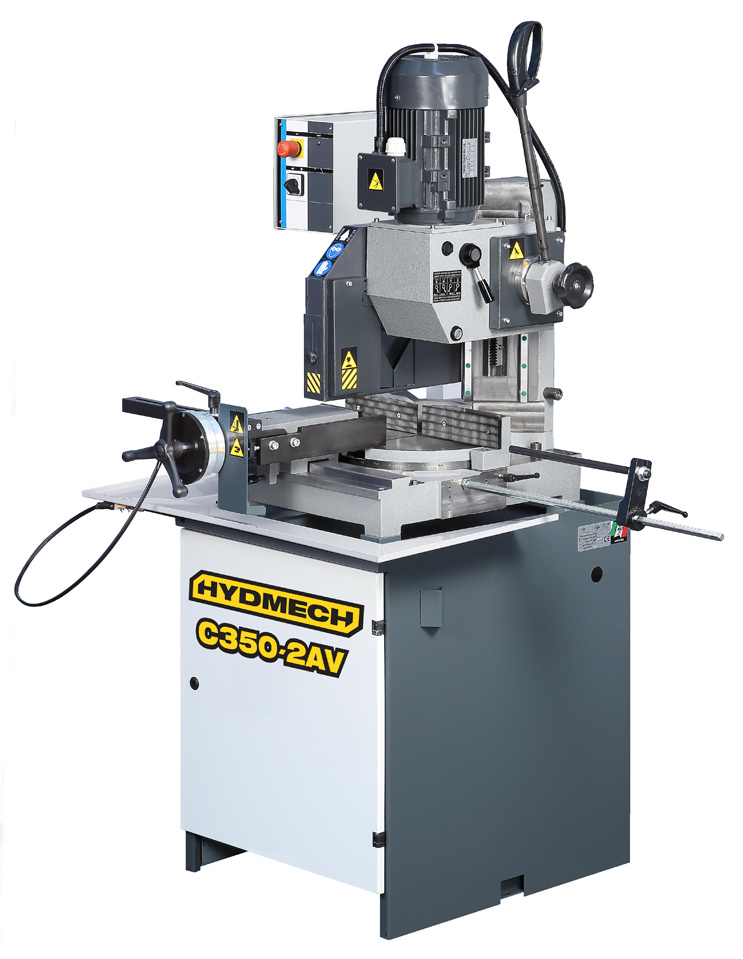
HYDMECH C350-2AV
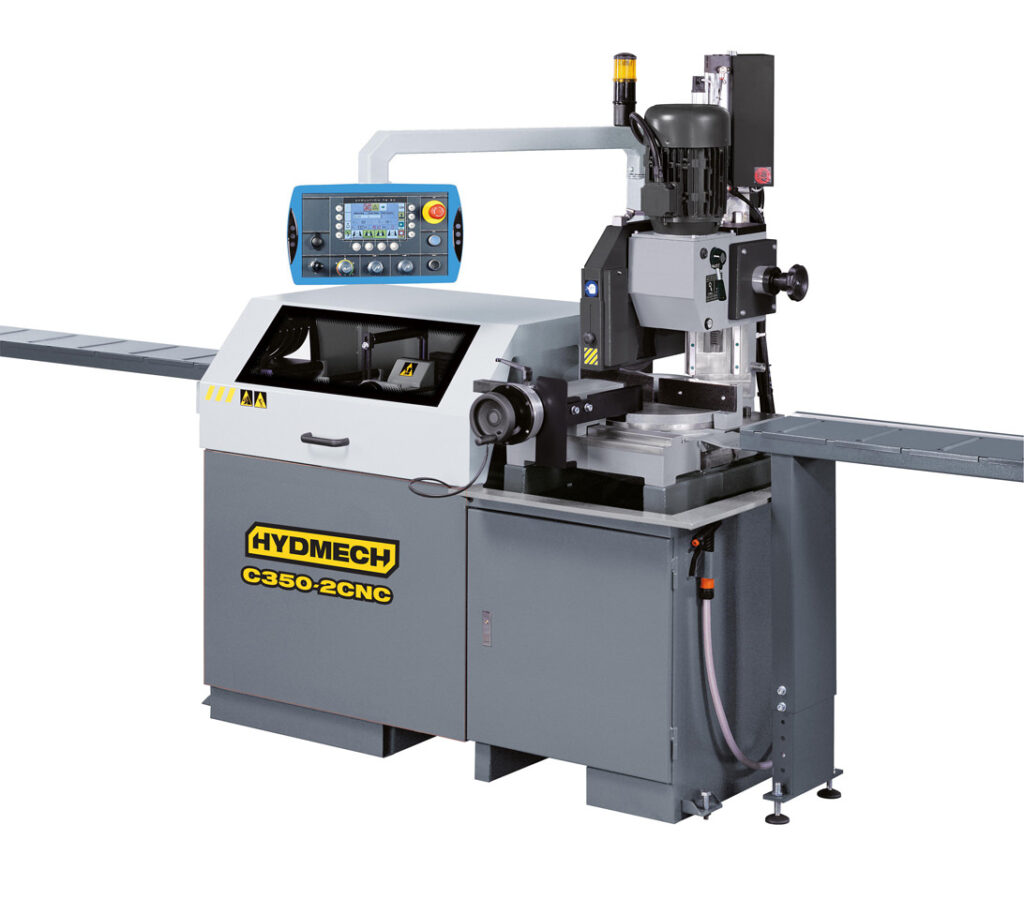
HYDMECH C350-2CNC
Matching Saw Type to Application
Choosing the right saw starts with application clarity:
- Horizontal band saws: Ideal for structural steel, bundle cutting, and production bar work.
- Vertical band saws: Useful for contour cutting and specialty applications.
- Cold saws and carbide circular saws: Common in tube, aluminum, and precision component production.
- Fully automatic systems: Best suited for high-volume or lights-out processing.
For industrial fabrication and heavy equipment producers in Indiana and Illinois, structural capacity and durability are often top priorities. Automotive suppliers and commercial parts manufacturers may prioritize surface finish, repeat accuracy, and integration with automated material handling.
Why Material Handling Matters More Than Ever
Modern saw investments increasingly include infeed conveyors, outfeed sorting, and programmable job queues. According to manufacturer guidance from HYDMECH, integrating automatic material handling improves throughput consistency while reducing operator strain (hydmech.com).
For Midwest shops facing workforce constraints, this shift reduces dependency on manual loading and secondary handling. It also improves safety and predictability—two factors that directly influence operating costs.
Evaluating ROI Beyond Purchase Price
Fabricators evaluating saw upgrades should look beyond capital cost and examine:
- Cycle time reduction
- Material yield and scrap rates
- Labor reallocation potential
- Maintenance requirements and uptime
- Integration with downstream automation
Even modest improvements in cut consistency can reduce downstream rework. In structural steel and aluminum fabrication, accurate first cuts protect margins in welding, fitting, and assembly stages.
Regional Considerations for Midwest Fabricators
Shops in Wisconsin, Michigan, Illinois, and Indiana often manage a mix of agricultural, heavy equipment, structural, and OEM contract work. This variability makes flexibility critical. A saw that handles both heavy structural shapes and smaller production runs without excessive changeover time delivers measurable value.
Additionally, reliable regional service support is essential. Downtime during peak production seasons—especially in construction-driven markets—can erase projected ROI quickly.
Key Questions to Ask Before Investing
Before committing to a new sawing system, production leaders should ask:
- What is our current bottleneck—speed, labor, accuracy, or material handling?
- Are we preparing for higher volume or greater mix variability?
- Can automation reduce operator dependency?
- Is service and parts support locally accessible?
Clear answers help ensure the machine fits your production model—not the other way around.
Building a Smarter Saw Strategy
Saws may not always get the same attention as lasers or press brakes, but they anchor production flow. For Midwest fabricators competing on delivery speed and quality, modernizing sawing operations can unlock efficiency gains across the entire shop floor.
If you’re evaluating upgrades or trying to determine whether automation makes sense for your facility, now is a good time to reassess your process. Use the contact form below to ask questions, discuss your production goals, or explore what type of saw system aligns with your operation. The right guidance upfront can help you invest with confidence.
Related Video
Structural Band Saw Unboxing – Hydmech Horizontal Pivot Band Saws
Sources
- HYDMECH – Manufacturer information on automatic band saw systems: https://www.hydmech.com/
- The Fabricator – Coverage on automation and fabrication trends: https://www.thefabricator.com/
Get Weekly Mac-Tech News & Updates
