
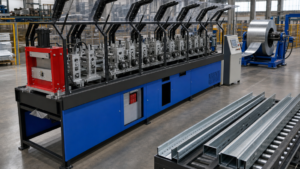
Dallan Full Electric 120 Roll-Forming Line
The Dallan Full Electric 120 uses servo-electric actuation in a compact coil-fed line for repeat thin-profile production. Its material limits, speed and energy claims need to be assessed against the buyer’s actual work and operating conditions.
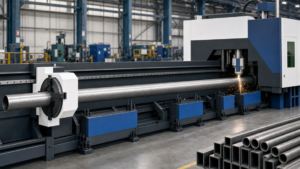
Tube Laser vs. Tube Punching for Mixed-Volume Work
Keep repeatable tube patterns on punching when existing tooling serves the work well. Consider a tube laser for changing geometry or routes with multiple operations, and compare the complete process for actual part families.
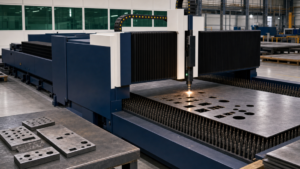
HSG GFA Large-Format Fiber Laser: Fit and Uses
The HSG GFA is worth evaluating when recurring parts and nests need a larger cutting format and the shop can support the material flow. Compare real work, handling, downstream needs, and the quoted configuration—not power alone.
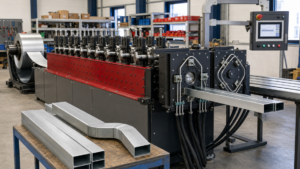
3×4 Downspout Roll Forming: Elbow Fit
An integrated 3×4 downspout line is worth evaluating when recurring orders include compatible straight sections and elbows. Profile geometry, material, actual machine configuration, and downstream handling determine whether the combined route fits.
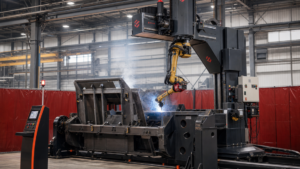
AGT BLOK Robotic Welding Programming
Choose a BLOK programming path by testing representative weldments against the shop’s CAD and weld information, staffing, and program-proofing needs.
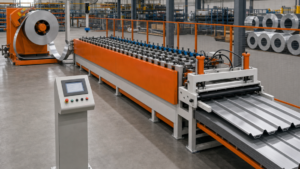
Roofing Roll-Former Loop Control
A contactless loop sensor helps coordinate coil payoff with a roofing roll former by monitoring the loose-strip reserve between them. Understand the operating clues it offers, the problems it cannot correct, and what to confirm for the STEFA ROLL FORMER LINE.
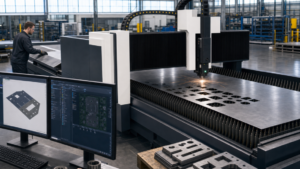
Swift-Cut Launches Swift-Laser Pro Fiber Laser
Swift-Cut’s first CNC fiber laser introduces 3-kW and 6-kW configurations for 5-by-10-foot sheet work, with a manual pull-out cutting deck. Buyers should test representative parts and assess sheet handling and downstream flow—not choose on power rating alone.
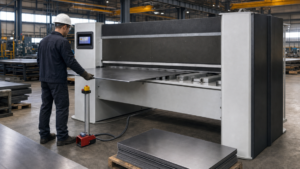
Plate Shear vs. CNC Plasma for Flat Blanks
A hydraulic plate shear is worth assessing for recurring straight-cut blanks when the material, cut length, and sample edge fit the next operation. CNC plasma remains useful for profiles, holes, slots, and bevels.
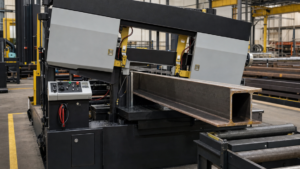
Outsource Structural Beam Sawing or Keep It In-House?
Outsource stable, released beam cuts when the in-house saw is delaying work and a supplier can meet the job requirements. Keep urgent or changing cuts in-house, and verify that downstream operations can use the capacity freed.
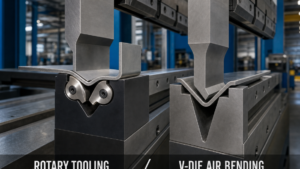
Rotary Press-Brake Tooling vs. V-Dies
Rotary press-brake tooling is worth evaluating when V-die contact marks a finish-sensitive part or panel movement complicates a straight flange bend. The proposed rotary style, part geometry, brake fit, and trial results determine whether it solves the problem.
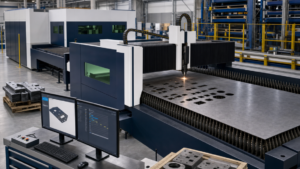
When to Add a Second Sheet Fiber Laser
A second sheet fiber laser adds shippable capacity only when cutting is a recurring constraint and staffing, material flow, uptime, and downstream processes can absorb the added work.
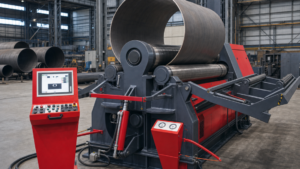
Akyapak 4-Roll Plate Rolls for Cylinder Production
A four-roll plate roll’s same-direction forming sequence can suit repeat cylinder work. Learn what distinguishes it and what to verify for the actual plate, diameter, and end condition.
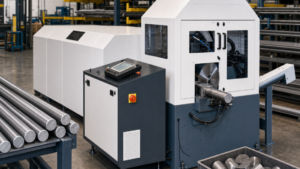
HYDMECH CSNC-200 Automatic Bar Saw
The HYDMECH CSNC-200 suits repeated 90-degree cut-to-length work on long bar stock when its automatic feed, stock capacity, and material flow fit the production job. Buyers should confirm loader configuration, blade reference, and published specification discrepancies before planning the application.
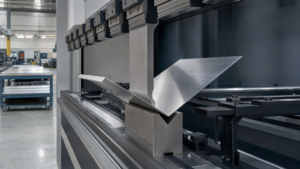
Stainless Steel Air Bending on a Press Brake
Set stainless air-bend corrections from representative production material and tooling. Control the measured angle after unloading, not the programmed punch stroke.
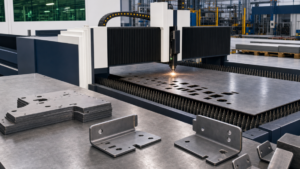
Laser-Cut Bend Reliefs for Press-Brake Parts
Use a bend relief where a press-brake bend ends beside constrained material or meets another flange. Set its shape, width, depth, and remnant around the actual bend zone and the finished corner the part needs.